
When it comes to securing your home or business, choosing the right type of IP camera is crucial. IP cameras come in various styles and configurations, each designed to meet different security requirements. Below, we break down the most common types of IP cameras to help you make an informed decision.
1. Wireless IP Cameras
Wireless IP cameras are perfect for homeowners and businesses looking for flexibility and easy installation. These cameras connect to your network via Wi-Fi, or a private wireless signal between the camera and a wireless hub which also can act as a centralized recorder, eliminating the need for extensive wiring. They are ideal for locations where running cables might be challenging or unsightly, and they often come with features like motion detection, cloud storage, and remote viewing capabilities.

Key benefits:
- Easy to install with no wiring
- Remote access from smartphones or computers
- Ideal for locations without pre-installed wiring
2. Wired IP Cameras
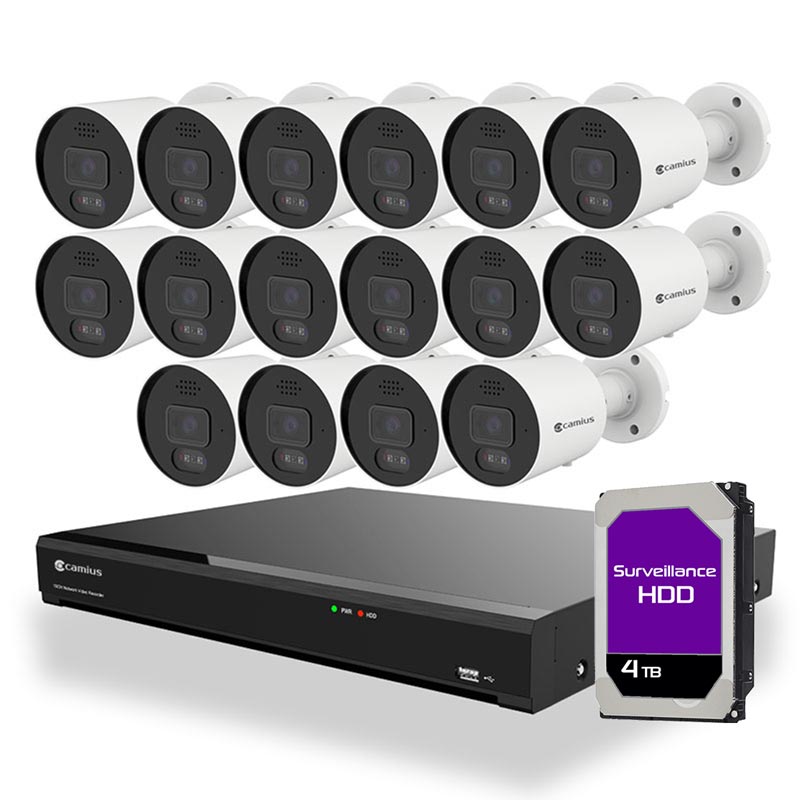
For those who prioritize reliability and consistent performance, wired IP cameras are a great choice. These cameras connect directly to your network via Ethernet cables, ensuring a stable and secure connection. They typically offer better image quality and are less susceptible to interference compared to wireless cameras.
Key benefits:
- Superior video quality and performance
- Less prone to interference and signal drops
- More secure as they are harder to hack than wireless cameras
3. PTZ IP Cameras (Pan-Tilt-Zoom)
PTZ IP cameras offer advanced functionality, allowing you to control the camera’s direction (pan), angle (tilt), and zoom remotely. These cameras are ideal for large areas that require coverage and flexibility, such as parking lots or warehouses. PTZ cameras can be preset to follow specific paths or trigger movements based on detected activity.
Key benefits:
- 360-degree coverage with remote control
- Ideal for large or open spaces
- Can follow preset paths or movements for dynamic surveillance
4. Bullet IP Cameras
Bullet IP cameras are known for their long, cylindrical shape and are designed to capture footage over long distances. These cameras are perfect for outdoor use, especially for monitoring large areas such as yards, driveways, or parking lots. Bullet cameras are typically weatherproof and durable, making them ideal for harsh outdoor conditions.
Key benefits:
- High-quality long-distance surveillance
- Excellent for monitoring perimeters or entry points
- Weather-resistant for outdoor use
5. Dome IP Cameras
Dome IP cameras are discreet and versatile, offering a wide angle view without drawing too much attention. These cameras are often used in retail stores, offices, or indoor environments where you need to monitor a wide area discreetly. Their dome shape also makes them more tamper-resistant, as it’s harder to tell which direction the camera is pointing.
Key benefits:
- Discreet, tamper-resistant design
- wide viewing angle for broad coverage
- Ideal for indoor surveillance
6. Day/Night IP Cameras
Day/Night IP cameras are designed to provide high-quality footage regardless of the lighting conditions. Whether it’s bright daylight or low-light environments, these cameras automatically adjust to capture clear images. Some models even come with infrared (IR) technology, allowing them to function in complete darkness.
Key benefits:
- Clear footage in any lighting condition
- Often includes infrared for night vision
- Ideal for 24/7 monitoring